2026 Ford Commercial & Fleet Vehicles | Chicago
Skip to main content
Commercial and Fleet Buying Guide

Ford Commercial and Fleet Vehicles for Chicago Businesses: 2026 F-150, Super Duty, Transit, and E-Transit

This is a vehicle selection guide for Chicago business owners. It covers what Ford actually publishes for the 2026 work lineup, gross vehicle weight rating by series, payload and towing where Ford states it, Transit and E-Transit configurations, what Ford Pro adds after the sale, and how the tax year 2026 Section 179 limits interact with a specific truck or van. Where Ford does not publish a number, this guide says so instead of estimating one.

  • Ford-published GVWR for every Transit, E-Transit and Super Duty series
  • 2026 F-150 engine, payload and cargo box data from Ford spec and order guides
  • Tax year 2026 Section 179 limits cited to IRS Rev. Proc. 2025-32
Contact the Dealership Commercial Service Center
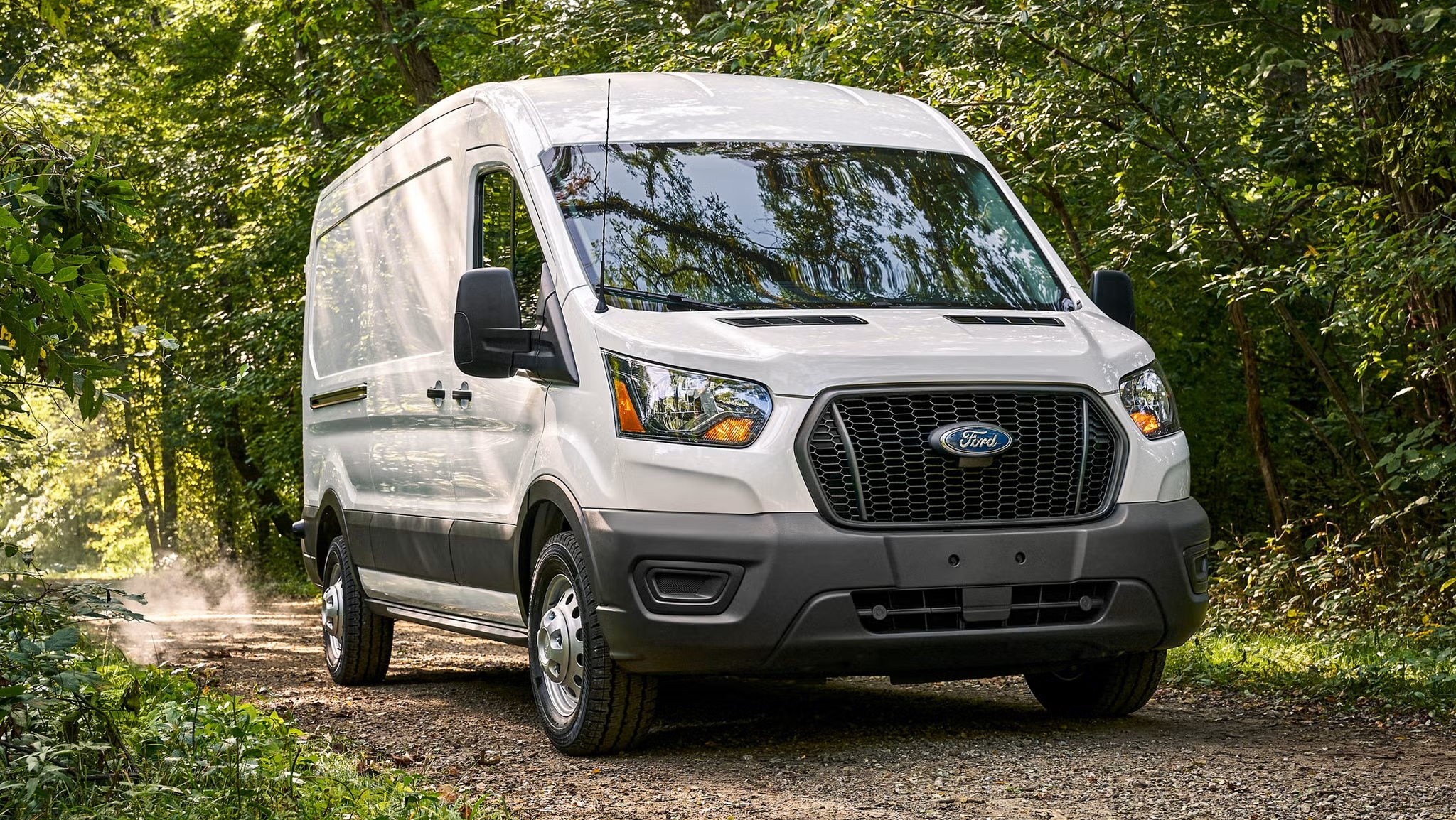
2026 Ford Transit high-roof cargo van

The short version

  • Pick by gross vehicle weight rating and body, not by trim. Ford publishes GVWR for Transit, E-Transit and Super Duty. Ford does not publish a GVWR for the F-150 anywhere in its spec sheet, towing guide or order guide, so the door jamb label on the specific VIN is the only correct source.
  • The 2026 F-150 tops out at 13,500 lb of conventional towing and 2,440 lb of payload, both with the 3.5L EcoBoost, and both vary by configuration.
  • Super Duty is the heavy end. Up to 8,000 lb of payload, up to 40,000 lb of gooseneck towing on an F-350 SRW with the High Output 6.7L Power Stroke and the 40K Gooseneck Tow Package, and up to 48,000 lb GCWR on F-450.
  • For tax year 2026 the Section 179 limits are $2,560,000 of deduction, a $4,090,000 phase-out threshold and a $32,000 cap on certain heavy passenger vehicles (IRS Rev. Proc. 2025-32, section 4.24). Whether any specific vehicle qualifies depends on its GVWR, its body configuration and the buyer's tax situation.
  • Murgado Ford of Chicago is not a tax advisor. Nothing on this page is tax advice. Confirm every figure with your own tax professional before you buy.
Ford Dealership in Chicago
2501 N Elston Ave
Service Open 6 Days a Week
Business Contact Form
Sources Cited

Start With Gross Vehicle Weight Rating, Not With Trim

Gross vehicle weight rating is the maximum the vehicle is rated to weigh fully loaded, including the vehicle itself, fuel, occupants, cargo and tongue weight. It is the single number that decides which Ford fits a job, which one needs a different driver licence class in some states, and which federal tax rule applies. Ford publishes GVWR for the Transit, E-Transit and Super Duty lines. Ford does not publish a GVWR figure for the F-150.

Ford-published GVWR by series, 2026 model year
Model and seriesFord-published GVWR
Transit T-1508,800 lb
Transit T-2509,150 lb
Transit T-3509,500 lb
Transit T-350 HD9,950 lb single rear wheel, 11,000 lb dual rear wheel
E-Transit9,500 lb
F-250 Super Duty9,900 lb to 11,400 lb
F-350 Super Duty, single rear wheelup to 12,400 lb
F-350 Super Duty, dual rear wheel14,000 lb
F-450 Super Duty, dual rear wheel14,000 lb
F-150Not published by Ford. Read the Safety Compliance Certification Label on the specific vehicle.

Do not assume the F-150 is over 6,000 lb GVWR

Ford does not publish an F-150 GVWR in the spec sheet, the towing guide or the order guide. Some F-150 configurations do exceed 6,000 lb and some do not. Ford's own guidance is that GVWR "is shown on the vehicle's Safety Compliance Certification Label, located on the driver's side door lock facing or the door latch post pillar." If a tax position depends on the rating, photograph that label on the actual truck and hand the photo to your accountant. Anyone who tells you every F-150 clears 6,000 lb is guessing.

The 2026 F-150 as a Work Truck

The 2026 F-150 is the right tool when the load fits in an open box and the trailer stays under about 13,500 lb. Ford rates maximum conventional towing at 13,500 lb with the 3.5L EcoBoost and maximum payload at 2,440 lb, also with the 3.5L EcoBoost. Both figures describe a best case configuration, not every truck. The work-oriented trims are XL, STX and XLT.

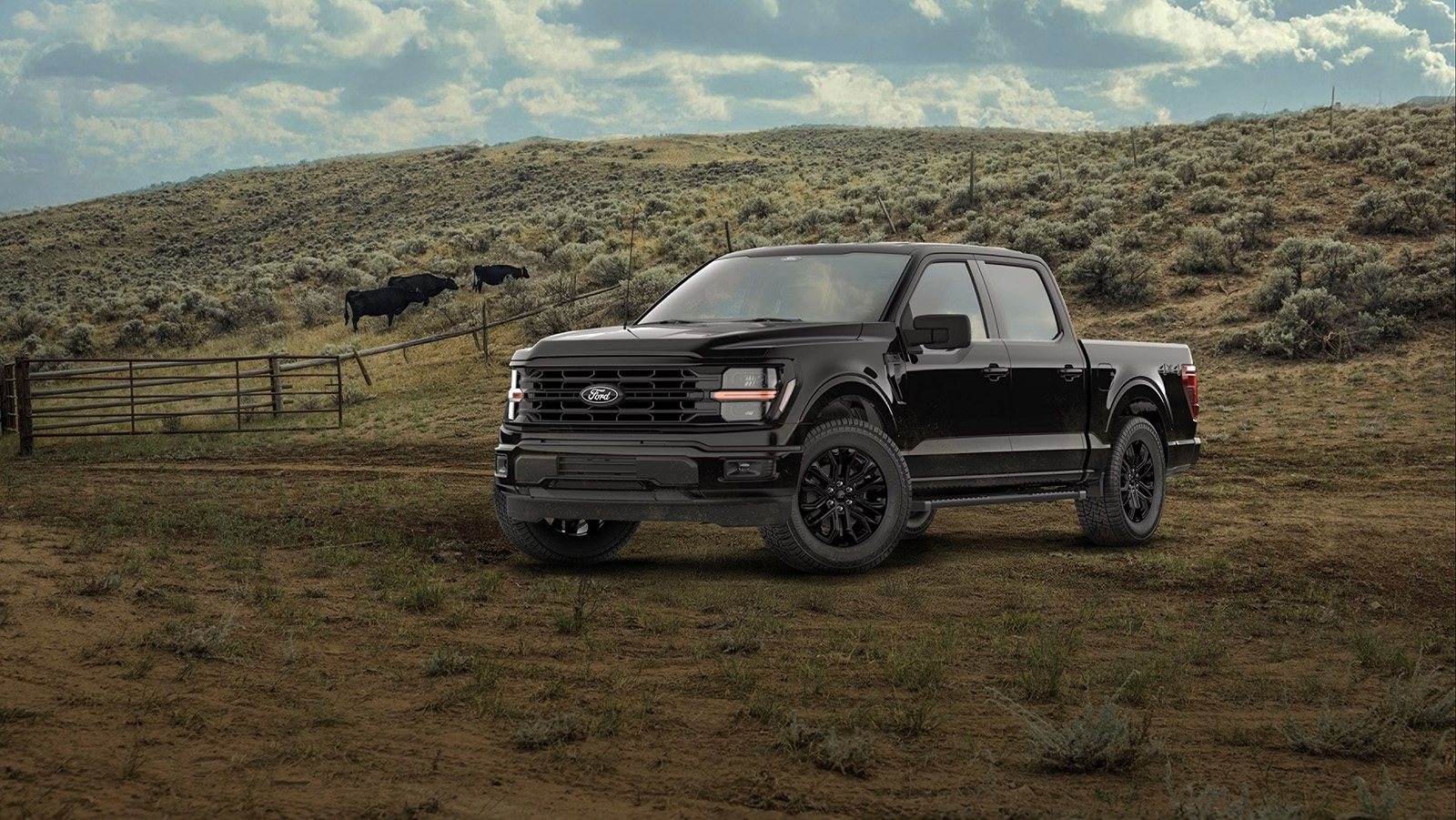
2026 Ford F-150 XLT configured for work use

Engines, output and payload

2026 F-150 engines available on work configurations
EngineHorsepowerTorque, lb-ftMax payload
2.7L EcoBoost V63254001,775 lb
3.5L EcoBoost V64005002,440 lb
5.0L V84004102,235 lb
3.5L PowerBoost full hybrid4305701,740 lb

Notice the pattern a fleet buyer needs to see. The highest payload rating on the list belongs to the 3.5L EcoBoost, not to the hybrid. The PowerBoost buys you generator capacity and a different torque curve, and it costs you roughly 700 lb of rated payload against the 3.5L EcoBoost. If the truck spends its life carrying material rather than powering tools, that is a real tradeoff to weigh at order time.

Cargo box lengths and volume

2026 F-150 cargo box options
Box lengthCargo volume
5.5 ft52.8 cu ft
6.5 ft62.3 cu ft
8.0 ft77.4 cu ft

Pro Power Onboard

Ford's order guide lists Pro Power Onboard in three levels for the 2026 F-150: a 400 W outlet, a 2.4 kW system on PowerBoost, and an optional 7.2 kW system. For a trade that currently tows a generator to every job, the 2.4 kW and 7.2 kW systems are the reason to look at the hybrid despite the payload penalty. Confirm which output level is on the specific build sheet, because the three levels are not interchangeable and they are tied to powertrain and option content.

2026 Super Duty: Where the Heavy Work Goes

Super Duty starts where the F-150 stops. Ford rates maximum payload at 8,000 lb across the Super Duty line. The two publishable towing headlines for 2026 are up to 40,000 lb of gooseneck towing on an F-350 single rear wheel equipped with the High Output 6.7L Power Stroke and the 40K Gooseneck Tow Package (option code 535), and up to 48,000 lb of gross combined weight rating on F-450. Every Super Duty engine pairs with the 10-speed TorqShift automatic.

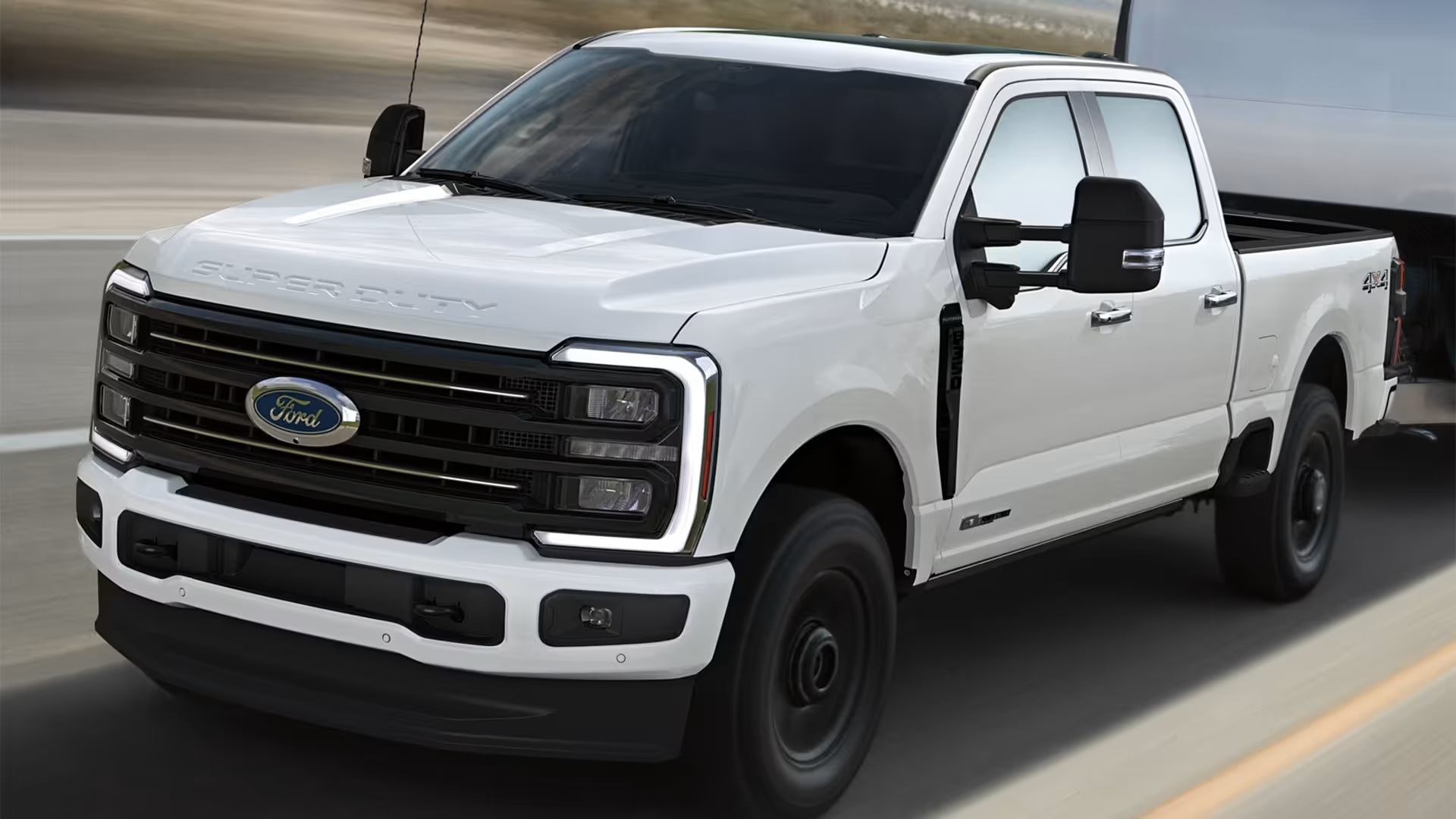
2026 Ford Super Duty F-350 towing a gooseneck trailer
2026 Super Duty engines, all with the 10-speed TorqShift automatic
EngineHorsepowerTorque, lb-ft
6.8L V8 gas405445
7.3L V8 gas430485
6.7L Power Stroke turbo diesel4751,050
6.7L High Output Power Stroke turbo diesel5001,200

Why this page does not print a single maximum conventional or fifth-wheel figure

Super Duty maximum trailer weights change with cab, drivetrain, rear axle ratio, wheelbase and engine, and the published summaries disagree with one another depending on which document you read. Rather than print a headline number that may not describe your build, ask us to pull the exact towing-guide row for the cab, drive configuration, axle and engine you are ordering. If you are already committed to a trailer weight, bring the trailer's gross weight and tongue or pin weight to that conversation.

2026 Transit: Configure It, Then Order It

Transit is a configuration exercise rather than a trim ladder. Ford builds it in four series, three roof heights and five wheelbases, with two gas V6 engines and available all-wheel drive, plus 12- and 15-passenger seating layouts. For 2026 Ford adds a 5G modem with over-the-air updates, makes SYNC 4 with the 12-inch display standard across all series, adds a new 8-inch instrument cluster, and makes the Forward Sensing System standard.

Series T-150, T-250, T-350, T-350 HD
Roof heights Low, Medium, High
Wheelbases 130, 138, 148, 156, 178 in
Passenger layouts 12- and 15-passenger available
2026 Transit engines
EngineHorsepowerTorque, lb-ft
3.5L PFDi V6275260
3.5L EcoBoost V6300400

What changed for 2026

  • 5G modem with over-the-air update capability
  • SYNC 4 with the 12-inch display standard on all series
  • New 8-inch instrument cluster
  • Forward Sensing System standard

Deliberately not published here: Transit cargo volume and payload

Cargo volume and payload for the Transit vary so widely across roof height, wheelbase and series that a single figure would be misleading, and Ford does not publish one that covers the range. Give us the roof, wheelbase, series and upfit you have in mind and we will pull the configuration-specific numbers rather than quote a headline that does not apply to your van.

2026 E-Transit: The Depot-Return Case

E-Transit fits routes that end at the same building every night. It uses an 89 kWh battery and a 198 kW motor rated at 266 horsepower and 317 lb-ft, carries a 9,500 lb GVWR, and is built as a Cargo Van, Chassis Cab or Cutaway. Level 2 charging peaks at 11.2 kW, a single onboard charger is now standard and a dual charger is optional under code 65C, and Pro Power Onboard is rated at 2.4 kW.

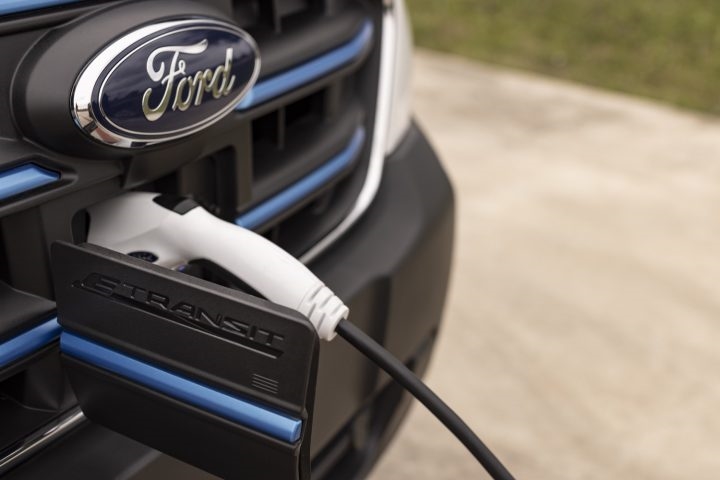
2026 Ford E-Transit charging at a commercial charging station
2026 E-Transit, Ford-published figures
ItemFord-published figure
Battery89 kWh
Motor output198 kW, 266 hp, 317 lb-ft
GVWR9,500 lb
Body stylesCargo Van, Chassis Cab, Cutaway
Level 2 charging11.2 kW peak
Onboard chargerSingle standard, dual optional (code 65C)
Pro Power Onboard2.4 kW

Deliberately not published here: E-Transit range, payload, cargo volume and DC fast-charge peak

We could not verify EPA-estimated range, payload, cargo volume or peak DC fast-charging power for the 2026 E-Transit by configuration from a current Ford source, so those numbers do not appear on this page. Every one of them matters for a route plan, and every one of them is configuration-specific. Ask us to confirm them for the exact body style, wheelbase and roof you are considering before you build a duty cycle around them.

What Chicago Does to a Work Vehicle

Three local realities worth pricing into a Cook County fleet plan

Duty Cycle

Short trips, long idles, tight alleys

A city work vehicle rarely gets a clean highway cycle. Trades running Bucktown, Logan Square and the Elston corridor stack short trips, curbside idling and constant low-speed maneuvering. That duty cycle is the one Ford names in its own severe-driving language, and it is the reason a service plan built on odometer milestones alone tends to run late. It also argues for the shorter wheelbases and lower roof heights on Transit when the route includes older alley access and low-clearance garages.

Salt and the underbody

Chicago salts from roughly November through March. Ford's corrosion perforation coverage runs 5 years with unlimited mileage, and aluminum panel coverage matches it. That is worth knowing before a fleet decides how long to keep a vehicle.

Uptime beats sticker price

A van that cannot make its first stop costs more in a morning than the spec difference between two trims costs over a year. Build the purchase around parts availability, service access and a realistic second vehicle plan.

What Ford Pro Adds After the Sale

Ford Pro is the commercial-side software and service layer that sits on top of the vehicles. Ford describes Ford Pro Intelligence as "a vertically integrated, cloud-based platform" with "more than one billion datapoints monitored and analyzed each day." For a small Chicago fleet the practical pieces are telematics, the service network and charging support, not the platform language.

Telematics and E-Telematics

Vehicle data reporting for both combustion and electric vehicles, including E-Telematics for the electric side of a mixed fleet.

Commercial Vehicle Centers

Ford states there are "700+ Ford Commercial Vehicle Centers" in its network. Ask any dealership directly whether it holds that designation before you assume it.

Ford Pro Mobile Service

Ford describes Ford Pro Mobile Service as "the largest mobile service fleet among full-line U.S. automakers." Availability varies by market and by dealership.

Ford Pro Charging

Depot and workplace charging support for E-Transit operators, covering hardware, installation and the software that schedules it.

Fleet identification

Ford operates fleet identification codes that can change warranty and program eligibility. If your business already has one, mention it early. Ask us to confirm current terms in writing.

Section 179 and Bonus Depreciation for Tax Year 2026

For tax year 2026 the IRS has set the maximum Section 179 expense deduction at $2,560,000, with a phase-out threshold of $4,090,000, and a separate $32,000 cap on the Section 179 deduction for certain heavy passenger vehicles. Those three figures come from Revenue Procedure 2025-32, section 4.24. A business that places more than $4,090,000 of qualifying property in service during tax year 2026 sees the $2,560,000 limit reduced dollar for dollar by the excess. Businesses may be eligible to expense qualifying vehicles under these rules. No one can promise a specific dollar outcome without seeing your return.

Tax year 2026 against tax year 2025

Section 179 inflation-adjusted limits, tax year 2026 against tax year 2025
LimitTax year 2026Tax year 2025
Maximum Section 179 expense deduction$2,560,000$2,500,000
Phase-out threshold$4,090,000$4,000,000
Cap for certain heavy passenger vehicles$32,000$31,300

The contrast matters locally. This dealership's own Section 179 page was written for tax year 2025 and still displays the prior-year figures, including the $31,300 heavy-vehicle cap. Use that page for the dealership's contact path and use the numbers on this page, cited above, for tax year 2026. If you see the older figures quoted anywhere, that is the reason.

What the $32,000 cap actually applies to

The cap is not a general "SUV rule" and it is not a truck rule. Internal Revenue Code section 179(b)(5) applies it to a four-wheeled vehicle that is primarily designed to carry passengers over public streets, roads or highways, that is not subject to section 280F (which in practice means it is rated above 6,000 lb gross vehicle weight), and that is rated at not more than 14,000 lb gross vehicle weight. A vehicle inside that band has its Section 179 deduction capped at $32,000 for tax year 2026 unless one of three statutory exceptions applies.

The three statutory exceptions, quoted

Section 179(b)(5) excludes from the cap a vehicle that meets any one of the following. The wording below is the statutory language, not a summary.

Where the F-150 sits, honestly

Every one of the tests above starts from the vehicle's gross vehicle weight rating, and Ford does not publish a GVWR for the F-150. Some F-150 configurations exceed 6,000 lb and some do not, and the difference decides which set of rules your accountant applies. The only correct source is the Safety Compliance Certification Label, which Ford describes as being "shown on the vehicle's Safety Compliance Certification Label, located on the driver's side door lock facing or the door latch post pillar." Before you plan around any of this, open the driver's door on the actual truck, photograph the label and give the photograph to your tax professional together with the box length.

Bonus depreciation after the OBBBA

Section 179 is not the only mechanism. The One Big Beautiful Bill Act, Public Law 119-21, changed bonus depreciation. IRS Publication 946 states that the law "reinstated the 100% special depreciation allowance for certain qualified property acquired and placed in service after January 19, 2025." The IRS newsroom describes it as a permanent 100% additional first year depreciation deduction for eligible property acquired after that date. The governing guidance is IRS Notice 2026-11, issued on 01/14/2026. A taxpayer may elect 40% instead of 100%.

Two details are commonly missed. First, the acquisition-date test and the placed-in-service test are separate tests, and a vehicle can satisfy one without satisfying the other. Second, bonus depreciation and Section 179 interact; which one your accountant applies first, and whether an election is worth making, is a return-level decision rather than a showroom decision.

The more-than-50-percent rule and recapture

Section 179 property must be used predominantly, meaning more than 50%, in a qualified business use. That is a continuing requirement rather than a one-time test at purchase. IRS Publication 946 states the consequence verbatim:

"If the section 179 property is not used predominantly (more than 50%) in your trade or business at any time before the end of the property's recovery period, the benefit of the section 179 expense deduction must be reported as 'other income' on your return."

In plain operational terms: if a truck that was expensed drops below 50% business use during the recovery period, the benefit comes back as income. That is why mileage logs matter, and it is why a vehicle that doubles as a personal daily driver is a harder case than a van that never leaves the business.

Documents to hand your tax professional

2026 Ford Warranty Coverage That Matters to a Fleet

Ford's new vehicle limited warranty is 3 years or 36,000 miles of bumper-to-bumper coverage and 5 years or 60,000 miles of powertrain coverage, whichever comes first. The two terms that matter most for a Chicago fleet are the diesel engine coverage at 5 years or 100,000 miles and the corrosion perforation coverage at 5 years with unlimited mileage.

2026 Ford warranty coverage summary
CoverageTerm
Basic (bumper to bumper)3 years / 36,000 miles
Powertrain5 years / 60,000 miles
Diesel engine5 years / 100,000 miles
Corrosion perforation5 years / unlimited mileage
Aluminum panels5 years / unlimited mileage
Roadside assistance5 years / 60,000 miles
Hybrid and electric unique components, including the high voltage battery8 years / 100,000 miles

One exclusion is worth quoting exactly, because it is the single most misunderstood line in electric vehicle coverage. On the high voltage battery, Ford states: "Loss of battery capacity due to or resulting from gradual capacity loss is NOT covered." Normal degradation over years of depot charging is expected behavior, not a warrantable defect.

Ford also operates a powertrain coverage extension tied to valid fleet identification codes. We are not quoting its terms here because we could not verify the exact wording. If your business holds a fleet identification code, ask us to confirm current eligibility and terms in writing before you rely on it.

One Open Safety Recall Every Towing Fleet Should Check

NHTSA campaign 26V104000, which Ford identifies as recall 26C10, covers an integrated trailer brake control that may lose communication while towing, which can cause a loss of trailer brake function. Owner notification letters were mailed on 03/25/2026. The campaign sweeps across the F-150, Super Duty, Ranger, Maverick, Expedition, Navigator and E-Transit, which makes it a genuinely fleet-wide item rather than a single-model issue.

If your business runs more than one Ford and any of them tow, this is worth a single afternoon of VIN checks rather than a per-vehicle guess. Run each VIN against the NHTSA recall lookup, note which units are affected, and book the remedy through the service department. Loss of trailer brake function is not a defect you want to discover on the Kennedy with a loaded trailer behind you.

Murgado Ford of Chicago dealership storefront on Elston Ave
Murgado Ford of Chicago 2501 N Elston Ave · Chicago, IL 60647
Murgado Ford of Chicago Why Talk to Us

A Ford dealership on Elston Ave, inside the city you actually work in.

Bucktown location, direct service line, and a lead form that reaches a person. If you are comparing configurations, bring the job description and we will work backward from the load to the build.

Authorized Ford dealership

A fixed address on the North Side at 2501 North Elston Ave, not a broker or a listing site.

Service six days a week

Mon-Fri 7:00 AM to 7:00 PM, Saturday 7:30 AM to 3:00 PM, closed Sunday.

Direct service line

Reach the service department at 779-243-5517.

Configuration first

Series, roof, wheelbase, axle and upfit get settled before anyone talks about a trim name.

Documents, not claims

Ask for the towing-guide row or the order-guide page. If we cannot show it, we will say we cannot.

Murgado Automotive Group

Part of an established automotive group operating multiple dealerships.

Address   2501 N Elston Ave, Chicago, IL 60647 Service   779-243-5517 Quick Lane   773-687-7810
Commercial and Fleet

Bring the job. We will work backward to the build.

Load, route, upfit and duty cycle first. Series, engine, axle and box length second. Tax questions go to your accountant with our documents in hand.

Tax year 2026 Section 179 limit $2,560,000 Rev. Proc. 2025-32, section 4.24. Eligibility depends on the vehicle and on your tax situation.

Rated, not estimated

GVWR comes from Ford's published series data or from the door jamb label. Never from a guess.

Sources on the page

Every number above names where it came from, including the IRS documents behind the tax figures.

Gaps stated out loud

Transit payload, E-Transit range and Super Duty conventional maximums are omitted on purpose.

Service on Elston

The same building that sells the vehicle keeps it running, six days a week.

Vehicle specifications reflect Ford published data for the 2026 model year and vary by configuration. Tax figures are stated for tax year 2026 and are drawn from IRS Revenue Procedure 2025-32 and related IRS guidance. Murgado Ford of Chicago is not a tax advisor and does not provide tax, legal or accounting advice. Consult a qualified tax professional. No pricing, inventory or availability is stated or implied on this page.

2501 North Elston Ave, Chicago, IL 60647 779-243-5517 Mon-Fri 7am-7pm  |  Sat 7:30am-3pm
Contact the Dealership
Serving Chicago Businesses

Ford Commercial Vehicles Near You in Chicago, IL

Murgado Ford of Chicago is an authorized Ford dealership at 2501 North Elston Ave, Chicago, IL 60647, in Bucktown on the city's North Side, and is part of the Murgado Automotive Group. The service department is open six days a week and the dealership serves businesses throughout Cook County, Illinois.

The Elston Avenue location sits between the Kennedy Expressway and Western Avenue, which puts it inside the working radius of trades operating in Lincoln Park, Bucktown, Wicker Park, Logan Square, Avondale, Humboldt Park, Ukrainian Village, Roscoe Village, North Center and Irving Park. Service is Monday through Friday 7:00 AM to 7:00 PM and Saturday 7:30 AM to 3:00 PM, closed Sunday. The service department can be reached at 779-243-5517, and Quick Lane takes vehicles without an appointment at 773-687-7810.

Related pages: new Ford inventory, the dealership Section 179 page (written for the prior tax year), commercial service center, and the 2026 F-150 buyer's guide for Chicago.

Lincoln Park Bucktown Wicker Park Logan Square Avondale Humboldt Park Ukrainian Village Roscoe Village North Center Irving Park Elston Ave Corridor Kennedy Expressway / I-90/94 Western Ave Corridor Cook County, IL

Frequently Asked Questions

Commercial and fleet questions from Chicago business owners

What is the Section 179 deduction limit for tax year 2026?

For tax year 2026 the maximum Section 179 expense deduction is $2,560,000 and the phase-out threshold is $4,090,000, with the deduction reduced dollar for dollar for qualifying property placed in service above that threshold. A separate cap of $32,000 applies to certain heavy passenger vehicles. All three figures come from IRS Revenue Procedure 2025-32, section 4.24. A business may be eligible to claim a deduction on a qualifying vehicle; whether it can, and for how much, depends on the vehicle and on the buyer's tax situation. Murgado Ford of Chicago is not a tax advisor. Consult a qualified tax professional.

Is the Ford F-150 over 6,000 lb GVWR?

Ford does not publish a gross vehicle weight rating for the F-150 in its specification sheet, towing guide or order guide, so no one can answer this for the model as a whole. Some F-150 configurations exceed 6,000 lb and some do not. Ford's guidance is that GVWR "is shown on the vehicle's Safety Compliance Certification Label, located on the driver's side door lock facing or the door latch post pillar." If a tax position depends on the rating, read and photograph that label on the specific vehicle and give it to your tax professional.

Do all cargo vans automatically escape the $32,000 heavy-vehicle cap?

No. Internal Revenue Code section 179(b)(5) sets out three exceptions, and the one most often applied to vans is a three-part conjunctive test: the vehicle must have "an integral enclosure, fully enclosing the driver compartment and load carrying device," must not have "seating rearward of the driver's seat," and must have "no body section protruding more than 30 inches ahead of the leading edge of the windshield." All three have to be true at once for that exception to apply. Treat it as three items to verify on the specific vehicle with a tax professional, not as a blanket rule for cargo vans.

How much can a 2026 Ford F-150 tow and carry?

Ford rates the 2026 F-150 at up to 13,500 lb of maximum conventional towing and up to 2,440 lb of maximum payload, both achieved with the 3.5L EcoBoost V6. Payload by engine is 1,775 lb for the 2.7L EcoBoost, 2,440 lb for the 3.5L EcoBoost, 2,235 lb for the 5.0L V8 and 1,740 lb for the 3.5L PowerBoost hybrid. Ford states: "Max payload varies and is based on accessories and vehicle configuration. See label on doorjamb for carrying capacity of a specific vehicle."

What is the maximum Super Duty gooseneck towing rating for 2026?

Up to 40,000 lb, on an F-350 with single rear wheels equipped with the 6.7L High Output Power Stroke diesel and the 40K Gooseneck Tow Package, option code 535. Ford also publishes a gross combined weight rating of up to 48,000 lb on F-450. Maximum conventional and fifth-wheel figures vary by cab, drivetrain, axle ratio and engine, so ask for the towing-guide row that matches the exact configuration rather than relying on a headline number.

What is the E-Transit's driving range?

This page does not publish a range figure, because we could not verify a current Ford EPA-estimated range by configuration for the 2026 E-Transit. What Ford does publish is an 89 kWh battery, a 198 kW motor rated at 266 horsepower and 317 lb-ft, a 9,500 lb GVWR and Level 2 charging that peaks at 11.2 kW. Range, payload, cargo volume and peak DC fast-charging power all vary by body style and configuration. Contact the dealership and we will confirm them for the specific configuration you are considering.

My business already runs several Fords. Is there an open recall I should check?

Yes, one that is specifically relevant to towing fleets. NHTSA campaign 26V104000, Ford recall 26C10, covers an integrated trailer brake control that may lose communication while towing, which can result in loss of trailer brake function. Owner letters were mailed on 03/25/2026, and the campaign covers F-150, Super Duty, Ranger, Maverick, Expedition, Navigator and E-Transit. Check each VIN through the NHTSA recall lookup and book the remedy through the service department at 779-243-5517.

Sources and notes

  • Vehicle specifications, GVWR, payload and towing ratings: Ford 2026 model specification and order guide data for the F-150, Super Duty, Transit and E-Transit. Ratings vary by configuration; confirm the rating for a specific VIN before you commit. Ford’s payload disclaimer, verbatim: “Max payload varies and is based on accessories and vehicle configuration. See label on doorjamb for carrying capacity of a specific vehicle.”
  • Commercial programs and upfit: Ford Pro Body Builder Advisory Service and Ford Pro published descriptions. Program availability, eligibility and terms vary; confirm with the dealership.
  • Section 179 and federal tax figures for tax year 2026: IRS Revenue Procedure 2025-32 (section 4.24), Internal Revenue Code section 179(b)(5), IRS Publication 946, IRS Notice 2026-11 (issued 01/14/2026), and Public Law 119-21. This is general information about published federal tax rules only and is not tax advice.
  • Warranty: Ford 2026 warranty guide coverage terms.
  • Recall: NHTSA safety recall 26V104000 (Ford reference 26C10); owner letters mailed 03/25/2026. Confirm the current status of any VIN with NHTSA or the dealership.

Talk through a commercial Ford build

Murgado Ford of Chicago · 2501 N Elston Ave · Service 779-243-5517

Ford Commercial and Fleet 2501 N Elston Ave, Chicago
Contact Us