
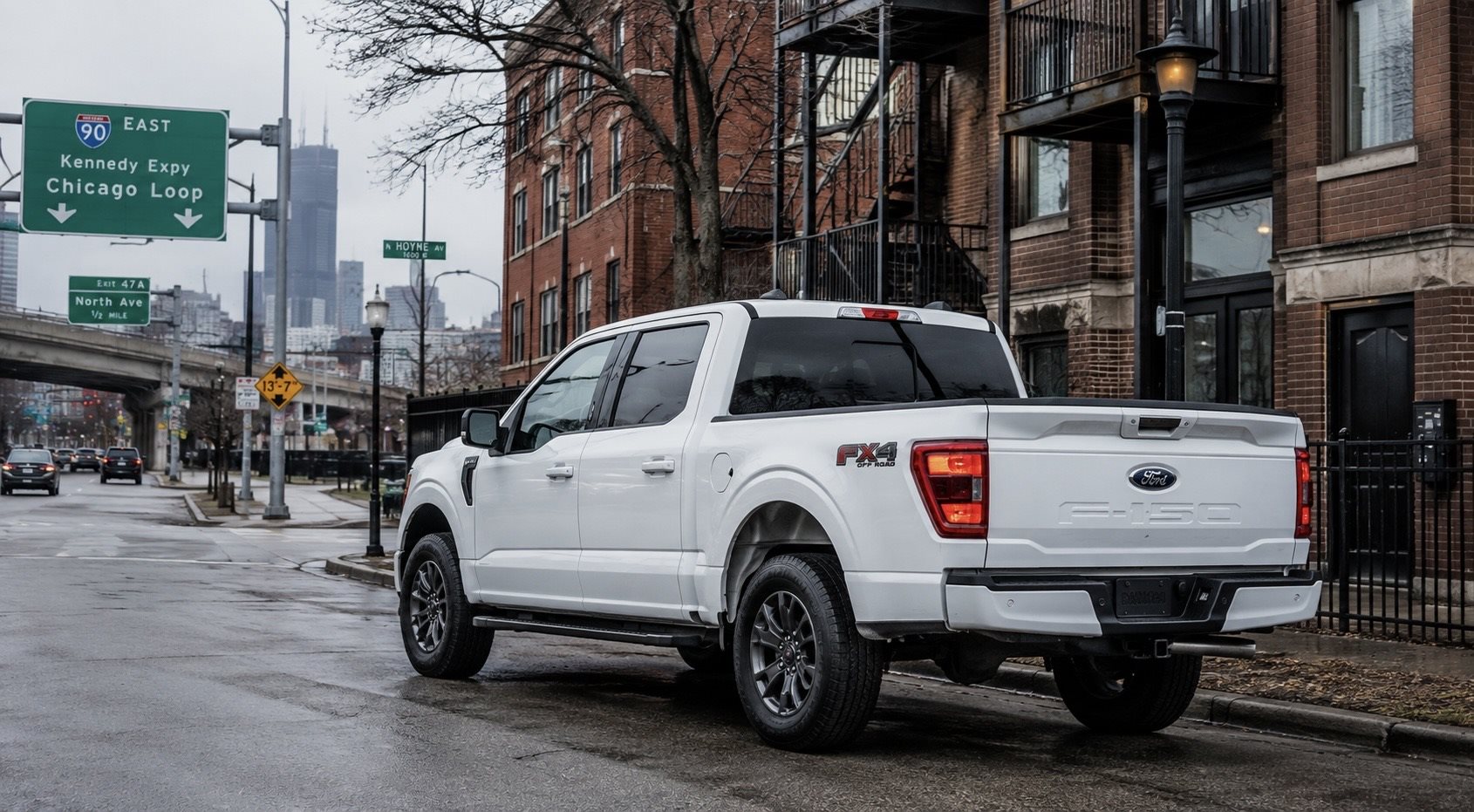
Note: This comparison was last reviewed August 2026 by the sales team at Murgado Ford of Chicago, a factory-authorized Ford dealer in Bucktown. Pricing, EPA ratings, and towing figures below are drawn from published manufacturer specifications and are noted as of this review date - confirm current MSRP, incentives, and configuration-specific ratings with our team or on the vehicle's window sticker before you buy.
The short version: the 2026 F-150 posts the highest max towing rating of the three (13,500 lbs with the 3.5L EcoBoost and Max Trailer Tow Package), the highest published max payload (2,440 lbs), and the widest engine lineup, from a base turbo V6 through a full hybrid to a supercharged Raptor R. The Ram 1500 counters with the smoothest ride in the segment thanks to its coil-spring rear suspension and a payload figure on its base V6 that stays highly competitive with the F-150's. The Tundra leans on Toyota's reliability reputation and standard advanced safety tech across every trim, including the base SR. Which one is actually right for you comes down to what you're hauling, where you're parking it, and how you drive it through a Chicago winter - all covered below.
This guide breaks the three trucks down engine by engine, tow rating by tow rating, and dollar by dollar, then adds the parts that generic spec-sheet comparisons skip: what these trucks are actually like to own on Kennedy Expressway commutes, in Bucktown and Logan Square alley parking, and hauling a boat or camper north to Wisconsin on a February weekend. We'll also tell you plainly where the F-150 isn't the automatic answer. Our goal is to highlight where each truck excels so you can choose the one that best matches your priorities.
2026 F-150 vs. Tundra vs. Ram 1500: Quick Comparison
| Spec | 2026 Ford F-150 | 2026 Toyota Tundra | 2026 Ram 1500 |
|---|---|---|---|
| Starting MSRP | Roughly $39,000 (XL, before destination) | Roughly $41,000 (SR, before delivery/processing) | Roughly $41,000-$42,000 (Tradesman, before destination) |
| Base engine | 2.7L EcoBoost twin-turbo V6, 325 hp | 3.4L twin-turbo V6 i-FORCE, 348 hp | 3.6L Pentastar V6 w/ eTorque, 305 hp |
| Hybrid option | PowerBoost full hybrid, 430 hp / 578 lb-ft | i-FORCE MAX, 437 hp / 583 lb-ft | No full hybrid; Pentastar and Hurricane I6 use eTorque mild-hybrid assist |
| Max towing | Up to 13,500 lbs (3.5L EcoBoost, Max Trailer Tow Package) | Up to 12,000 lbs (SR5 4x2 Double Cab, gas) | Up to 11,610 lbs (3.0L Hurricane I6) |
| Max payload | Up to 2,440 lbs | Up to 1,940 lbs | Up to 2,360-2,370 lbs (Pentastar V6) |
| Best EPA-est. combined mpg | ~25 mpg (PowerBoost hybrid, 4x2) | ~20 mpg city (i-FORCE MAX hybrid, 4x2) | ~22 mpg est. (Pentastar V6, RWD) |
| Rear suspension | Leaf-spring solid axle | Leaf-spring solid axle | Coil-spring, multi-link (standard); air suspension available |
| Trim count | 9 (XL through Raptor R) | 7 (SR through Capstone) | 10-11 (Tradesman through Tungsten) |
Figures above are manufacturer-published maximums for properly equipped vehicles and vary by cab, bed, drivetrain, and options. EPA ratings are estimates for comparison only. Confirm exact ratings for your build using the window sticker.
Engines and Powertrains, Side by Side
Ford F-150: the widest range
The F-150 offers the deepest engine lineup of the three. The base 2.7L EcoBoost V6 makes 325 hp and 400 lb-ft, enough for most daily-driver and light-towing buyers. Above that sits the 5.0L V8 for drivers who want a traditional naturally aspirated feel, the 3.5L EcoBoost V6 for maximum towing, the PowerBoost full hybrid, and the supercharged 5.2L V8 exclusive to Raptor and Raptor R. That range means a Chicago buyer can spec an F-150 purely for city commuting and light hauling, or build one specifically to tow a camper to Michigan every summer, without stepping outside the F-150 badge.
The PowerBoost hybrid deserves particular attention for Chicago buyers: it pairs 430 hp and 578 lb-ft with an onboard generator (Pro Power Onboard, up to 7.2 kW on equipped trims) that can run job-site tools or power a home during an outage - genuinely useful given how often Chicago's outer neighborhoods see storm-related outages in summer.
Toyota Tundra: fewer choices, strong standard hybrid availability
Tundra's engine story is simpler: every trim uses some version of the 3.4L twin-turbo V6 (348 hp on SR, 389 hp on SR5 and above), with the i-FORCE MAX hybrid (437 hp, 583 lb-ft) optional starting at Limited. Toyota doesn't offer a naturally aspirated V8 in this generation, which is a real departure for buyers coming from an older Tundra or a domestic V8 truck - the twin-turbo V6 sound and delivery is different, even if the output numbers are competitive.
Ram 1500: four engines, no full hybrid
Ram's 2026 lineup runs four engines: the 3.6L Pentastar V6 with eTorque mild-hybrid assist (305 hp), the returning 5.7L HEMI V8 with eTorque (395 hp), and two states of the 3.0L Hurricane twin-turbo I6 - a standard-output version (420 hp) and a high-output version (540 hp) exclusive to the RHO and Tungsten. Ram doesn't offer a full hybrid or plug-in option on the 1500 for 2026, which matters if a buyer specifically wants electric-assist city driving or PowerBoost-style generator capability - the F-150 and Tundra both have hybrid answers to that; Ram doesn't yet.
Towing and Payload: Which Truck Hauls More
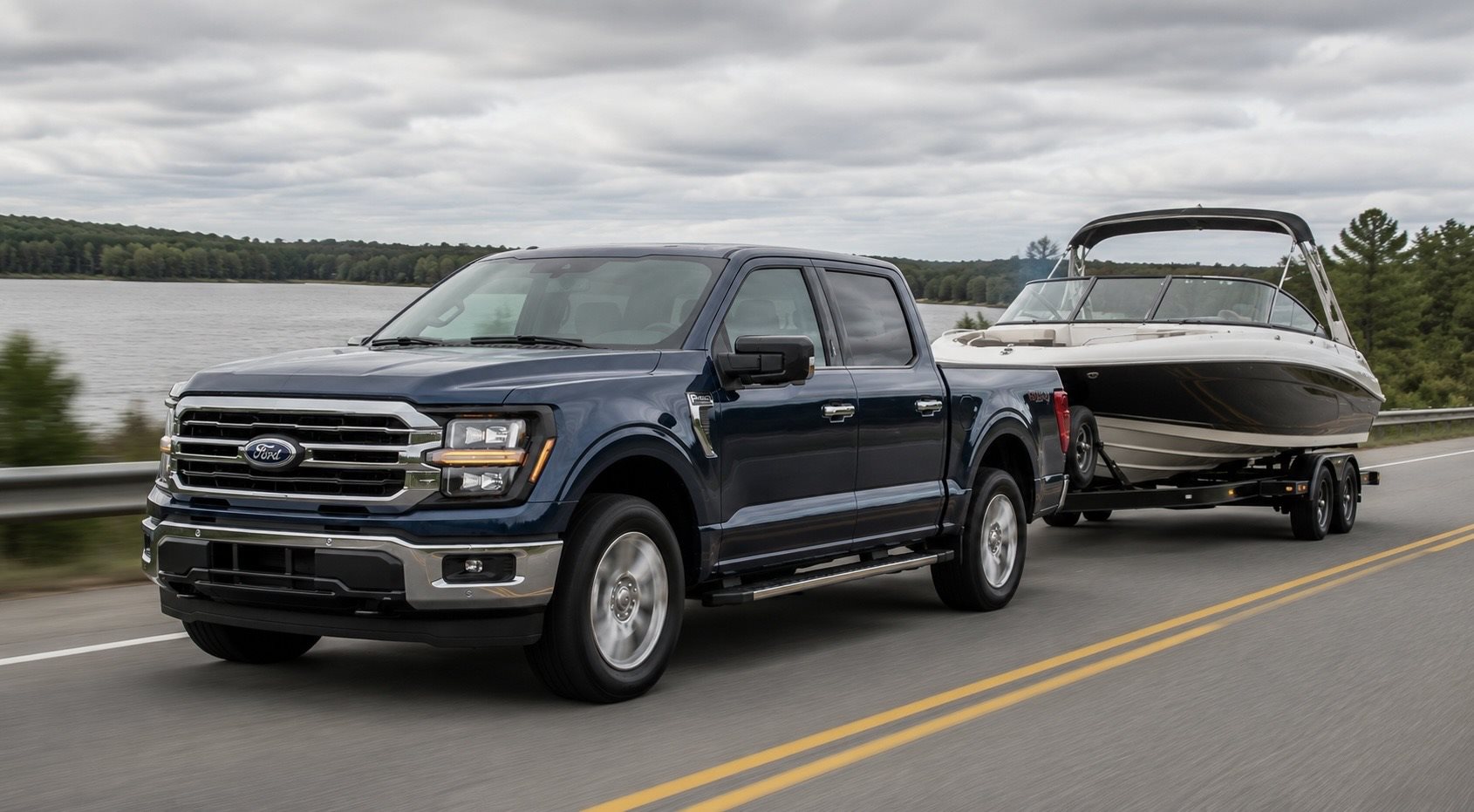
For pure max towing, the F-150 wins outright at up to 13,500 lbs with the 3.5L EcoBoost and Max Trailer Tow Package, ahead of the Ram's 11,610 lbs (Hurricane I6) and the Tundra's 12,000 lbs (gas V6). That gap matters for buyers towing full-size boats or larger travel trailers to Wisconsin or Michigan lake country - the kind of weekend trip that's common enough among Bucktown and Logan Square truck owners that it's worth spec'ing for.
Payload tells a closer story: the F-150 posts the highest published maximum of the three at up to 2,440 lbs, in a specific work-focused configuration. The Ram is highly competitive right behind it - its base Pentastar V6 configuration reaches up to roughly 2,360-2,370 lbs, well ahead of the Tundra's 1,940-lb ceiling. If your use case is bed-loading - mulch, lumber, tools, landscaping material - rather than trailer towing, payload numbers matter more than the towing figure, and it's worth speccing the specific configuration that hits your number rather than assuming the headline max applies to every trim.
Note: Every towing and payload figure in this section is a manufacturer-published maximum for a specific, properly equipped configuration - not a number that applies to every trim or build of that truck. Trailer tongue weight, passengers, and cargo all count against payload before you calculate remaining tow capacity. Confirm the exact rating on the certification label of the specific vehicle you're considering.
Cab, Bed, and Fit for Chicago Streets
All three trucks offer a work-focused smaller cab and a family-sized crew cab, but the practical difference in Chicago shows up in garages and alleys, not on paper. A SuperCrew F-150, CrewMax Tundra, or Crew Cab Ram with the standard 5.5-to-6.5-foot bed runs close to 19-20 feet bumper to bumper depending on configuration - long enough that a Bucktown or Wicker Park garage built for a sedan may need a test-fit before you commit to a long-bed crew cab. If garage clearance is tight, all three brands offer a shorter box option on their crew-cab configurations that trims a foot or more off overall length without giving up interior space.
Winter matters here too. Illinois road crews run rock salt and calcium chloride aggressively on expressways and arterial streets, and full-size trucks with their larger underbody surface area and exposed frame components are not immune to salt-belt corrosion over years of Chicago winters. Regular undercarriage rinses in late winter and early spring extend the life of brake lines, exhaust hangers, and sensor connectors on any of these three trucks equally - this isn't a place where one brand has a structural advantage over another.
Technology and Driver-Assist Features
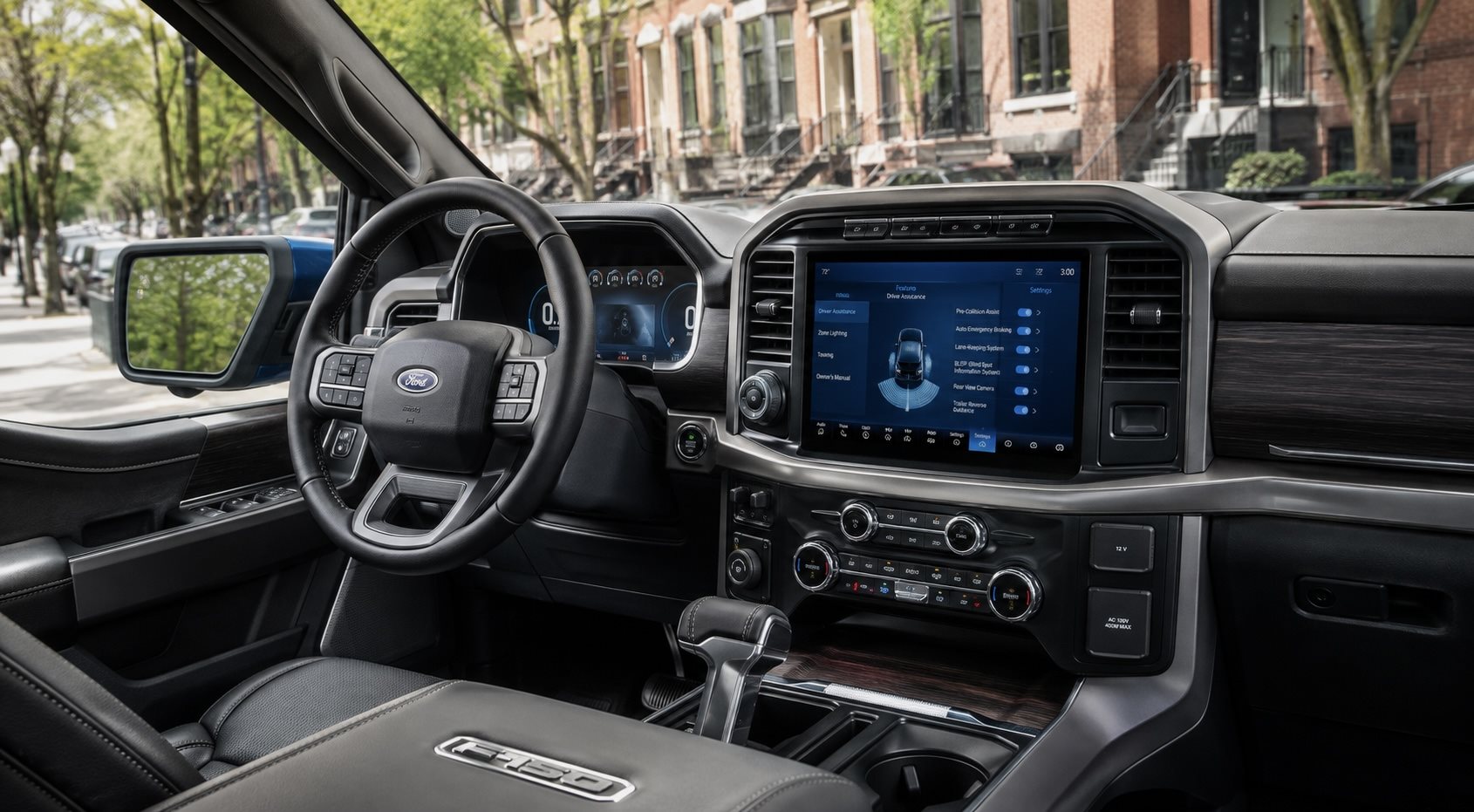
Toyota's approach is the most consistent across the lineup: Toyota Safety Sense 2.5, including pre-collision warning with pedestrian detection, lane tracing assist, and full-speed dynamic radar cruise control, comes standard on every 2026 Tundra trim, including the base SR. Ford and Ram both build a broader menu, but availability shifts more by trim and package. Ford's Co-Pilot360 suite comes standard across the F-150 lineup, and BlueCruise hands-free highway driving is available on multiple trims (not just the top ones), active on Ford's mapped hands-free highway network - a real convenience for truck owners who log long highway stretches on regular trips out of the city. Ram's Uconnect 5 system is generally regarded as one of the more polished infotainment interfaces in the segment, with screen sizes ranging from 8.4 inches on Tradesman up to a 14.5-inch panoramic display on Tungsten.
If hands-free highway driving on a regular commute is a priority, check current BlueCruise trim and route-map availability directly with our team - coverage and trim eligibility both change over time, and we'd rather confirm it against your specific route than promise blanket coverage here.
What You'll Actually Pay in Chicago
On paper, all three trucks start within about $3,000 of each other - the F-150 XL around $39,000, the Tundra SR around $41,000, and the Ram Tradesman in the low-$40,000s, all before destination charges, options, and any dealer or manufacturer incentives active at the time of purchase. Treat these as approximate reference points, not locked prices - confirm exact current MSRP with our sales team or the manufacturer before you shop. Those entry-trim numbers are useful for comparison but rarely reflect what a buyer actually drives home in, since work-focused base trims sell in smaller volumes than mid-range configurations.
Where the real spread shows up is at the top of each lineup: a loaded Tundra Capstone or Ram Tungsten can push past $85,000–$90,000, while a well-equipped F-150 Platinum or Raptor typically lands somewhat below that ceiling. None of these figures account for current incentives, lease cash, or trade equity, all of which move faster than a published spec sheet - the only way to get your actual number is to build your configuration with our sales team and check it against what's live today.
See current F-150 inventory and pricing for exact configurations and what's on our lot right now.
Warranty and Ownership Costs
Ford's standard coverage is the industry-typical 3-year/36,000-mile bumper-to-bumper warranty with a 5-year/60,000-mile powertrain warranty. Toyota's coverage runs the same 3-year/36,000-mile basic and 5-year/60,000-mile powertrain terms, and new Toyota purchases add ToyotaCare, complimentary factory-scheduled maintenance for 2 years or 25,000 miles. Ram advertises a 10-year/100,000-mile powertrain limited warranty on select 2026 trucks, which would be longer than either competitor's standard coverage - but this isn't lineup-wide, and Ram's own marketing frames it as available on select trims rather than standard equipment. Treat it as a promotional or trim-specific benefit to confirm, not an assumed feature of every 2026 Ram 1500. Confirm exact warranty terms and eligibility conditions for the specific trim and powertrain you're considering with a Ram dealer, since coverage can vary by engine and trim within a single lineup.
Which Truck Fits Which Kind of Chicago Driver
Frequent towing to Wisconsin or Michigan (boat, camper, trailer): The F-150's 13,500-lb max tow rating and the widest range of tow-focused packages give it the most headroom, particularly with the 3.5L EcoBoost.
Contractors and tradespeople loading the bed daily: The F-150's work-focused configurations post the highest published payload max of the three (2,440 lbs), with the Ram's base V6 trim close behind - spec the exact payload figure for your actual build rather than assuming either brand's headline number applies.
Buyers who want standard advanced safety tech regardless of trim or budget: The Tundra's Toyota Safety Sense 2.5 being standard from the base SR up is a genuine advantage if you're buying at the lower end of the price range and don't want to pay extra for driver-assist features.
Daily commuters who want the smoothest ride: The Ram's coil-spring rear suspension (and optional air suspension) generally rides more like a large SUV than a traditional leaf-spring pickup, which matters if most of your miles are on Chicago's patched and pothole-prone streets rather than a job site.
Buyers curious about an electric or hybrid work truck: Ford currently offers the F-150 Lightning, a fully electric version of the F-150, alongside the conventional gas and PowerBoost hybrid lineup - giving Ford buyers a wider range of electrification options today than the Tundra or Ram 1500, which are gas and hybrid-assist only in their current 2026 lineups.
Honest Trade-offs: Where the F-150 Isn't the Automatic Answer
We're a Ford dealer, so it's fair for a reader to expect this section to be thin. It shouldn't be. The Tundra's standard-across-the-lineup safety tech is a real advantage for a budget-conscious buyer who doesn't want advanced driver-assist features locked behind a $10,000 trim jump. Toyota's reputation for long-term reliability, while not something we can independently verify vehicle-by-vehicle, is a documented factor in resale value data across the industry and is a legitimate consideration for a buyer planning to keep a truck 10-plus years. And the Ram's ride quality and payload-per-dollar on base trims are genuinely competitive advantages, not marketing spin - if ride comfort and bed capacity matter more to you than outright tow rating, the Ram deserves serious cross-shopping before you commit to an F-150.
Where we think the F-150 earns the recommendation is towing headroom, engine breadth, and electrification options (hybrid and full EV) in one lineup. If none of those three things are priorities for you, this comparison may point you toward a different one of these three trucks - and that's a fine outcome for an honest buyer's guide.
Frequently Asked Questions
Which truck has the highest towing capacity: F-150, Tundra, or Ram 1500?
The 2026 F-150 has the highest maximum towing rating of the three at up to 13,500 lbs, achieved with the 3.5L EcoBoost V6 and the Max Trailer Tow Package. The Tundra tops out around 12,000 lbs on gas power, and the Ram reaches up to 11,610 lbs with the 3.0L Hurricane I6.
Does the Ram 1500 offer a hybrid engine like the F-150 and Tundra?
Not a full hybrid. Ram's Pentastar V6 and Hurricane I6 engines use eTorque mild-hybrid assist for smoother stop-start behavior and a small torque boost, but Ram does not offer a full parallel hybrid comparable to Ford's PowerBoost or Toyota's i-FORCE MAX in the 1500 lineup for 2026.
Which of these three trucks has the smoothest ride?
The Ram 1500 is generally regarded as the smoothest-riding of the three because of its coil-spring, multi-link rear suspension, with an available air suspension for additional adjustability. The F-150 and Tundra both use a more traditional leaf-spring solid rear axle, which favors payload consistency over ride comfort.
Is the Toyota Tundra more reliable than the F-150 or Ram 1500?
Toyota has a strong industry reputation for long-term reliability that shows up in resale-value data, but reliability varies by model year, powertrain, and how a specific vehicle is maintained. We can't make a vehicle-specific reliability claim for any of these three trucks without independent long-term data, and we'd encourage cross-shopping consumer reliability surveys alongside this comparison.
Which truck is best for towing a boat to a Wisconsin lake house?
For maximum towing headroom, the F-150 with the 3.5L EcoBoost and Max Trailer Tow Package posts the highest rating of the three. That said, the right choice depends on your specific trailer's loaded weight, tongue weight, and how much margin you want above your actual tow weight - talk to our sales team about matching a configuration to your trailer's specs rather than shopping off the headline number alone.
Does the F-150 come in a fully electric version?
Yes. The F-150 Lightning is Ford's all-electric version of the F-150, currently offered alongside the conventional gas and PowerBoost hybrid F-150 lineup. As of this comparison, neither the Tundra nor the Ram 1500 offers a fully electric full-size truck in their current lineups, though manufacturer plans can change - confirm current offerings if an EV is a priority for you.
How do warranty terms compare across the three trucks?
Ford and Toyota both offer a standard 3-year/36,000-mile bumper-to-bumper warranty with 5-year/60,000-mile powertrain coverage; Toyota adds complimentary ToyotaCare maintenance for 2 years or 25,000 miles. Ram advertises a longer 10-year/100,000-mile powertrain limited warranty on select 2026 trims, but this is a promotional or trim-specific benefit, not standard lineup-wide coverage - confirm exact terms and eligibility with a Ram dealer for your specific trim and powertrain.
Which truck is easiest to fit in a Chicago garage or alley?
It depends more on cab and bed configuration than brand. All three trucks offer a shorter box option on crew-cab configurations that can save a foot or more of overall length compared to the standard long bed. If garage clearance is tight, measure your specific space and compare it against the exact configuration's published dimensions before you buy, rather than assuming one brand runs shorter than another.
See the 2026 F-150 in Person
Every figure in this comparison is a published manufacturer maximum for a specific configuration - the truck that's actually right for you depends on your trailer, your bed load, your garage, and your budget. Our sales team can walk you through current F-150 inventory, build a configuration around your specific towing or payload needs, and give you today's real pricing and incentives.
Sales: (779) 244-6471
2501 N Elston Ave, Chicago, IL 60647 (Bucktown, off the Kennedy Expressway)
About Murgado Ford of Chicago
Murgado Ford of Chicago is a factory-authorized Ford dealer serving Chicago and the surrounding suburbs from 2501 N Elston Ave in Bucktown, operated by Murgado Automotive Group (formerly Fox Ford of Chicago). We sell and service the full Ford lineup, including F-150, F-150 Lightning, Ranger, Maverick, Super Duty, Bronco, and Explorer. Murgado Automotive Group also operates Toyota of Downtown Chicago; where this comparison references the Tundra, specs are drawn from Toyota's published manufacturer data, not dealer-specific claims.
Specifications, pricing, and towing/payload figures reflect published manufacturer data as of August 2026 and are subject to change. Configuration-specific ratings vary by trim, drivetrain, and equipment - confirm exact figures with our sales team or the vehicle's certification label before purchase. Published 2026-08-06 · Last reviewed 2026-08-06.